Small Farmers and Social Media

I’ve heard from a number of small farmers and small farm advocates that there isn’t a place for high tech in a community-based agricultural endeavor. I say that there is. In fact, I believe that the latest internet tools can enhance a small farming community and can lead to a greater connection with those who appreciate locally-grown, organic foods.

Just as email has become a replacement for a great deal of paper sent through USPS, social media can facilitate conversations with customers when time or distance is a problem. Social Media can also act as an amazingly immediate news service, uniquely geared towards an individual’s needs. Let me explain.

In Los Angeles a couple of years ago, there were a number of very fine chefs who could not afford to open any kind of eating establishment because the cost of real estate was exhorbitantly high. (Ah yes, the good old days…) They were past the apprenticeship stage of their careers but couldn’t get to the next level for lack of capital. These enterprising gourmands could, however, afford taco vans. Essentially, they took some kitchens-on-wheels and renovated them enough to accomodate their culinary specialities. They could park, cook, serve, and go. The biggest problem they had was that they couldn’t park in the same place everytime. So, how did they let their local customers know where they were serving?

They signed up for free accounts on Twitter, or Facebook, or the social medium of their choice, and posted their information on the sides of their vans. Interested customers friended or followed them either online or on their cell phones. They knew exactly where they could get their garlic vegetable soup, or allspice cupcakes, or chicken cordon bleu. The customers were waiting when the van pulled up each day.

It was a low-cost, inventive, quick business model that worked, getting fresh, gourmet foods to customers without all the hassle. (No wait staff to have to pay, either.) They could even drive out to the farms to pick up their fresh produce each day, eliminating the wait for deliveries. Lots of chefs in lots of cities are now following this model and doing quite well.

So, how can this translate to a non-movable small farm business? Let’s take a look at a couple of scenarios:

  • You run a CSA, providing baskets of fresh, organic, heirloom produce delivered to customers. Some of your customers have never seen Cherokee Purple tomatos, or Hokkaido pumpkins, or Collard greens and really don’t know how to cook them. A Facebook account is a great way to provide a listing, including pictures, of what you have included in the baskets that week, and links to recipes you’ve found online. You’re providing important information to your customers so that they can enjoy your produce even more.
  • You have a large section of U-pick crops on your land. You’d like to let people know when your fruits and vegetables are ready for harvesting. You need an immediate notification service to reach those who would be interested. A Twitter account might be just the ticket. Each entry may be only 140 characters in length but you can tell people an awful lot in that space. You can even provide links for more information.
  • You run an artisanal dairy, making unique cheeses. You’re larder is just jam-packed with a well-aged assortment of tasty comestibles and you need to move some stock. Any social media outlet will let you remind folks to meet you at the farmer’s market, ready, with cash in hand, to stock up on your fine cheeses.

Social media can give you direct access to your customers, without an outlay of money. It also eliminates the need to maintain contact lists. Customers have the ability to follow you at their discretion and to forward your information to others who would likewise be interested. Social media accounts, unlike websites, are free. Yep, free. What they do take is a bit of time. Unlike posting static information on a website, you create a conversation with your customers and, sometimes, even customers you don’t yet have.

How do you get your customers to follow you on a social media site? How did they become customers in the first place? Wherever you post information for people to see is where you can add your Facebook or Twitter information. Easy-peasy, pudding and pie…

Incidentally, my twitter account is @ruraltechgeek. If you want to know more about uses for social media, look me up there.
Newsbits 10-21-2010 and one more link…

Yes, I forgot an important link: the American Farmland Trust. You can’t have farmers if there’s no land to farm. Rather important, I’d say.

Okay, on to some interesting, intriguing, and almost urban news to report:

  • The Stranger, a decidely citified publication, ran a fabulous article on The Greenhorns, which is an association of young farmers. They have a site and a new documentary coming out soon. 
  • The USDA has a Beginning Farmer and Rancher program. This year’s grants are closed but bookmark this site for 2011. 
  • They also have information on grants for Farmer’s Markets. There are grants and all kinds of good information.
  • My geek-o-meter is hitting the red zone because this weekend is the opening of the Battlestar Galactica exhibit at the Science Fiction Museum in Seattle. If I didn’t have a concert on Saturday, I’d be making noseprints on all their shiney new glass cases that day. Blast! I’ll just have to go later.
  • My ability to grow sweet potatoes has, once again, completely tanked this year. So, I’m actively seeking techniques for improving my success at raising my favorite tuber. I’m dying to make some fries. There’s just something about sweet potato fries…mmmmm…

Okay, that’s all for now. I’ll try to use actual paragraphs in my next missive…unless I can create some really cool bullets, that is. (I wouldn’t hold my breath, however.)

Resources and Links

After today’s delightful meeting of Slow Food Port Susan, where we got to chat about all the potential for local, organic farming and the good things that come from it, I thought I would post links to the resources I’ve found so far. There are a few. First, the farming links:

  • The USDA Farmers Market site, with lots of information on funding, resources, and other ways to market your produce.
  • Washington State’s Guide for Farmers Markets has resources for insurance, funding, and it looks like there is a conference coming up. 
  • The Small Farms Conservancy has many resources for small farmers, including access to land, job opportunities, access to insurance, education, etc.
  • The Small Farmers Journal has fantastic information on all aspects of farming, whether or not you use horses. I’ve been reading it for years and I’m always surprised by how much I learn in every edition. They also sponser a fantastic 3-day auction in Madras, Oregon, every spring. I’ve picked up some great equipment and advice there.
  • The Healing Harvest Forest Foundation promotes healthy forests through sustainable, animal-powered forestry practices. The site explains much more about this eastern US-based group.
  • Jon at Open Gate Farm told me about World Wide Opportunities on Organic Farms (WWOOF), which gets apprentices and temporary workers onto small farms so that they can learn new techniques and share knowledge. It’s an international group, so people can exchange ideas worldwide. How fun is that? (Thanks Jon!) (And how weird is it that the URL is shorter than the name of the group?)
  • Crop Mob is a new idea started in North Carolina. (There is now a Seattle chapter, as well.) This group is made up of people who enjoy farming but aren’t able to yet. (Yes, farmer wannabees!) Instead, they volunteer to help on small farms when many hands are needed. They are volunteers who will assist with planting and harvesting and who only ask for a good meal and a chance to spend some time in the country in return. It’s a win-win for everyone.

Then, the geek links (yes, you can geek and farm at the same time):

  • The UK has a concerted effort to extend broadband access to its rural areas: Rural Broadband.
  • Worldometers – this site has constantly running statistics on many interesting things including food, ecology, water, and energy.
  • The fastest broadband speed in the US you would think would be in some happening urban area. Not so! It’s actually in Ephrata in rural Grant county. No kidding. It’s Grant County PUD.

That’s it so far. If you have some I should pass along, please send them to me.

Harvest Jubilee

Yes, I promised you pictures of Harvest Jubilee. Here are a few quick ones:

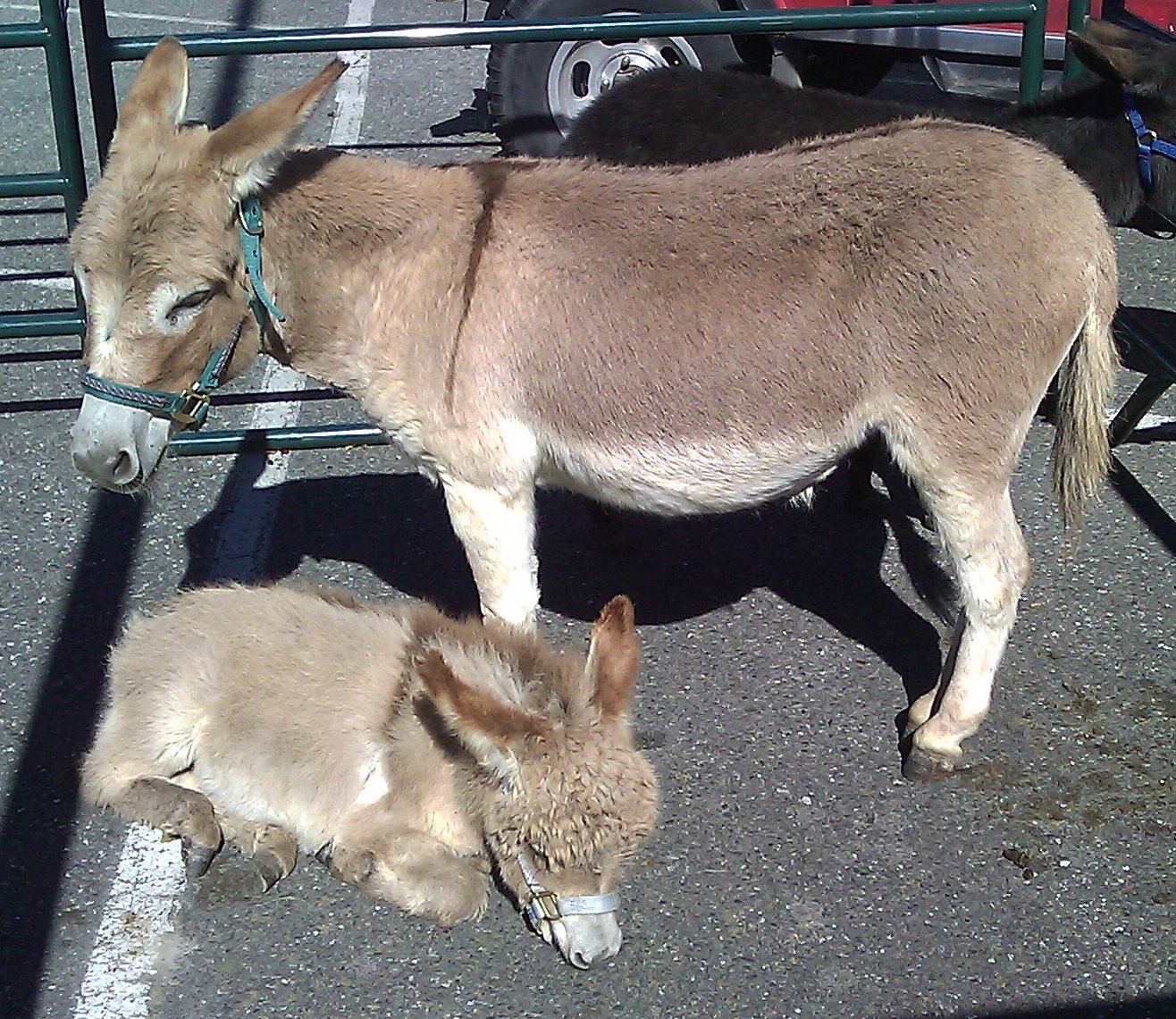
Miniature Donkey mare and foal

The mama donkey is probably not more that 30 inches tall, which makes the foal very tiny. There’s nothing cuter than a fuzzy face with big eyes and little tiny hooves. This little guy was all tuckered out after the festivities of the day. So was his mom. I was actually kneeling down when I took this shot. That tells you how small these little equines are.

I resisted the urge to take one home. I must remember, and properly recite, the horseowner’s mantra: I do not need another horse…I do not need another horse…

Alpaca Convention

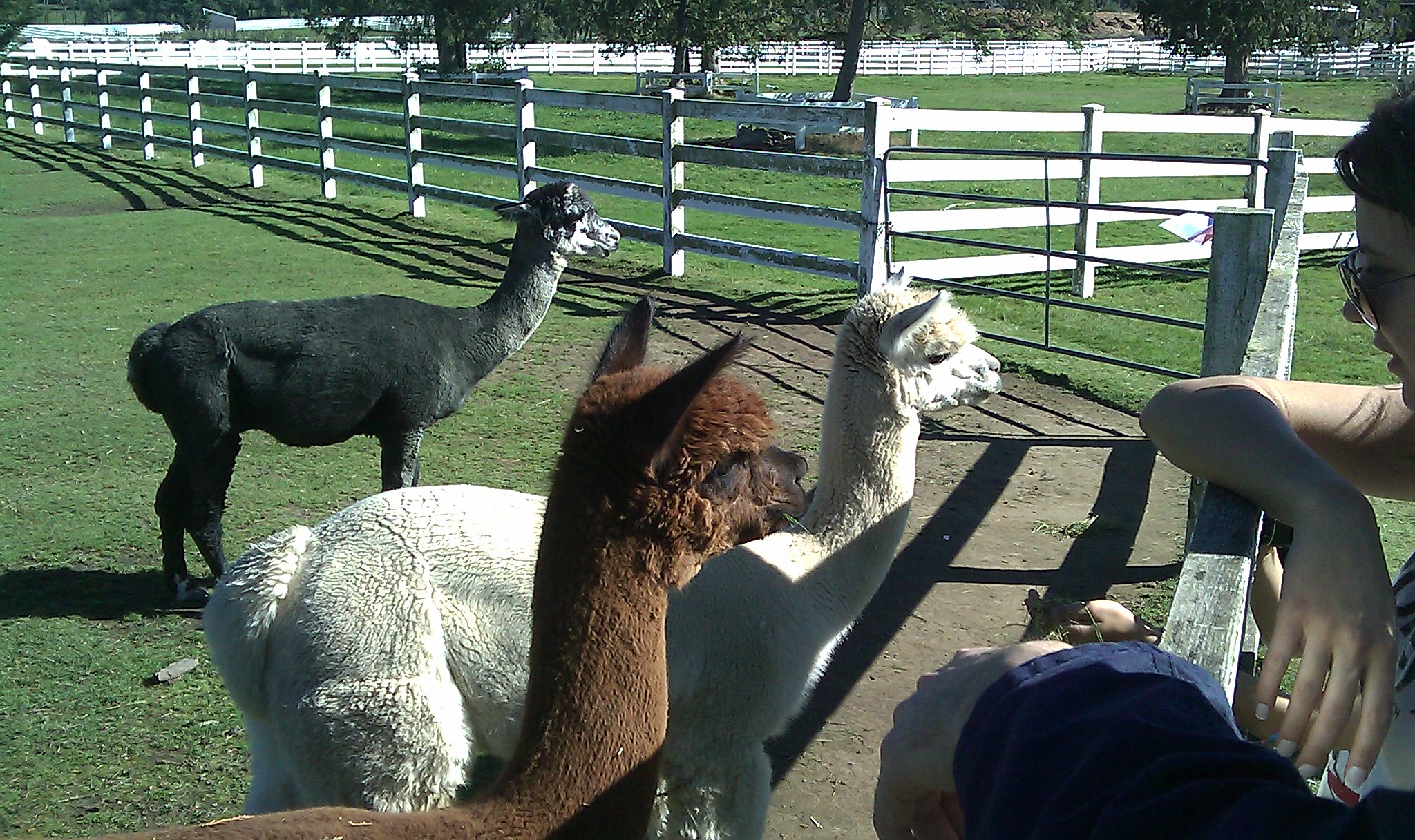
Alpacas come in so many beautiful colors. There were weavers and spinners on site, demonstrating how fleece becomes clothing. There was one baby alpaca who had found a small gravel area and was rolling around, having a good scritch. It was quite the giggle-fest.

This farm is actually for sale as the owner is consolidating herds with another producer and they want to be closer together. They have a beautiful barn (yes, I was having barn-envy) and the place is fully fenced. It was lovely.

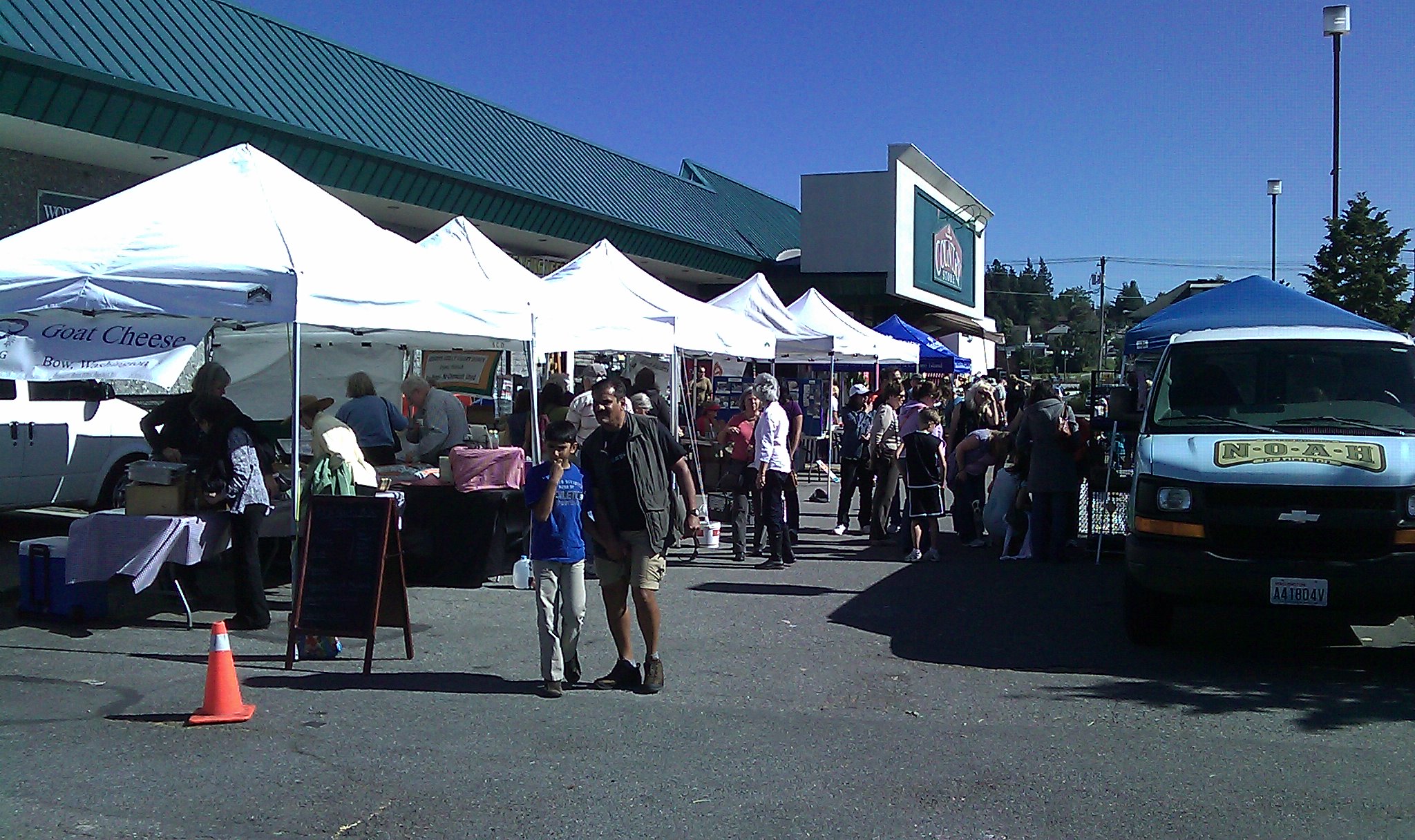
Booths at the Country Store

 There was a great showing of groups, vendors, handicrafts, and food at the Country Store. In addition, there were musicians playing and a fabulous assortment of horses, cows, and goats, which were brought in by their owners. Since the weather was great that day, the turnout was fairly huge. It’s always good to see people visiting the farms.

Newsbits 10-1-2010

There’s always something going on here. In fact, maybe too much. Here are a few things happening in the world of farming:

  • The state of Kerala, in India, has made it a new policy to go completely organic within the next 5 years. This is in response to the estimated 200,000 suicides among farmers since 1997. (See my earlier post on this.)
  • We now have a new Slow Food group in my neighborhood, Port Susan Slow Food. I think I’ll have to join.
  • The Harvest Jubilee was a gas! There were lots of people, lots of farms, and the cutest thing I’ve ever seen – a miniature donkey foal. Seriously, the “awww” factor was rediculous. Pictures are forthcoming.

It’s a Race!

A number of communications companies are working to provide true broadband service to more rural places. Here’s what I’m hearing:

Wild Blue, using a ViaSat satellite, is currently available. However, it doesn’t support VoIP, according to their website, and it has a 17,000 Mb limit per month, which is still better than Hughesnet’s 300 Mb per day limit. Both companies are now touting their new satellites to be launched by the end of the year, saying that they will have VoIP. Both are priced around $70 per month.

There is some cellphone, and wireless aircard, service that actually reaches here, but again, there are speed and download limits. None provide VoIP capabilities, which are crucial to my job. Their prices run between $60 to $120 per month.

Frontier Communications just bought all of Verizon’s rural communications land lines, hoping to provide DSL service to the countryside. They are saying that DSL should be here by Christmas. Their price is around $20 and there is no daily or monthly limit.

So, we’re still waiting to see what will happen. I’m tired of holding my breath.

What NOT to Do in the Country: A Farmer’s Rant

We have visitors to the farm. Unfortunately, they weren’t invited. For some reason, people feel free to dump their domestic animals on any open land they find, namely farms. We currently have feral cats we can’t catch and one poor little bunny that we finally were able to help. The reason we can catch her now is because she has gotten sick and has stopped running away from us. That’s not a good thing.

I am now faced with the reality of becoming responsible for these animals or watching them suffer from sickness, winter cold, and starvation as they try to survive in a wild environment. If I don’t take this little rabbit to the vet, pay for her care, and find her a permanent home, she will die over the winter and it won’t be pleasant. I’m really forced to pay for her. I don’t, in good conscience, have a choice.

Because there are so many skunks and racoons here, we can’t capture the feral cats in a standard trap and I’m afraid we may never be able to. More is the sadness for them and the songbirds they sometimes feed on. Dumping, also, can turn into a dangerous situation. I have a rancher friend who has to protect his herds from packs of feral dogs who roam freely across his land, without fear of humans. They are tough to catch and, especially around kids, can be extremely hazardous.

The neighbor had a really good idea. Anyone who dumps an animal, abdicating their proper responsibility, should themselves be dumped on some strange urban street somewhere and forced to survive a homeless existance for a couple of months. Then maybe they would understand. There are so many no-kill shelters and re-homing services for people who need to give up an animal, that there is absolutely no excuse for dumping. It’s just laziness and cowardice.

Finding

I’ve found Twitter invaluable in obtaining the information I really need, and in a timely manner.

One aspect of social media that I’m finding very fascinating is the alternative economy that is springing up. I’m seeing concert series, such as w00tstock, selling out just from retweets, without a dollar spent on advertising. (In fact, every concert I’ve gone to this year has been unadvertised and some of the audiences have been huge!) Products, services, and events are finding instant and widespread markets, if individuals think them compelling enough. It’s side-stepping conventional advertising.

People are circumventing traditional monopolies, such as Ticket Master, to sell their events. They are using third party manufacturers, such as Cafe Press or Jinx, to develop, sell, and ship their branded products. They are essentially creating a more grass-roots way of making a buck. There are a lot of dollars to be made this way, too, and for very little cost.

On a completely unrelated note, I’ve learned that, according to the American Farmland Trust, Farmer’s markets have increased by 16% since last year. Sixteen percent! That’s incredible. There are now 6132 farmer’s markets throughout the United States.